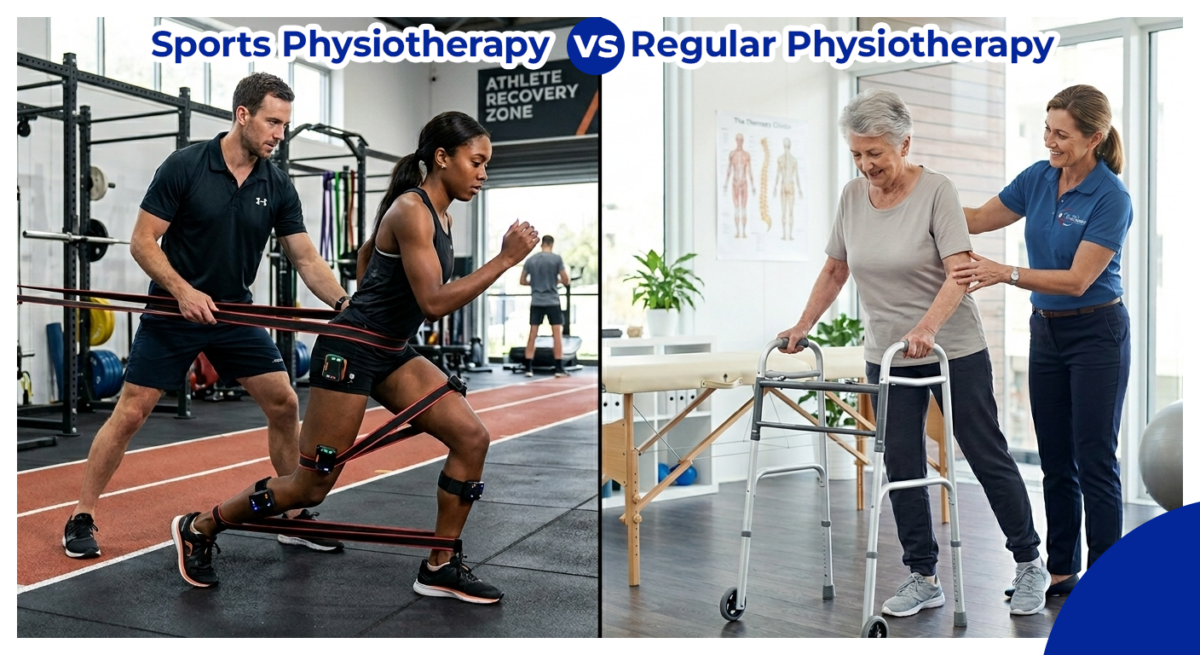
Sports injuries, muscle strain, joint pain, or post-exercise discomfort — many people assume all physiotherapy treatments are the same. However, sports physiotherapy and regular physiotherapy serve different purposes, follow different rehabilitation approaches, and target different patient needs. Understanding these differences helps patients and athletes choose the right treatment for faster recovery and better performance.
At Dr.Jha’s PhysioWorld, led by Dr. Niraj Kumar Jha, patients receive specialized physiotherapy solutions from an experienced Sports Physiotherapist in Mumbai, designed according to their lifestyle, activity level, and recovery goals.
What is Sports Physiotherapy?
Sports physiotherapy is a specialized branch focused on athletes, fitness enthusiasts, and physically active individuals. A Sports Physiotherapist in Mumbai understands body mechanics related to sports movements such as running, jumping, twisting, and sudden directional changes.
Unlike general treatment, sports physiotherapy aims not only to heal injuries but also to enhance performance and prevent future injuries.
Key focus areas include:
- Movement analysis
- Sport-specific strength training
- Injury prevention planning
- Performance optimization
Specialized Assessment for Athletes
One of the biggest differences lies in assessment methods.
Sports physiotherapists evaluate:
- Muscle imbalances
- Movement patterns
- Joint stability
- Sport-specific biomechanics
- Training load and recovery cycles
For example, a runner and a cricket player may have knee pain — but the cause and treatment approach will differ completely.
A specialized evaluation helps create a precise recovery plan rather than a generic exercise routine.
Sport-Specific Rehabilitation Programs
Regular physiotherapy focuses on returning patients to daily activities, whereas sports physiotherapy prepares individuals to return safely to competitive performance.
Sport-specific rehabilitation includes:
- Agility drills
- Plyometric training
- Functional strengthening
- Balance and coordination exercises
- Gradual return-to-play protocols
These programs simulate real sports movements, ensuring athletes regain confidence and physical readiness before resuming activity.
Performance Enhancement Focus
Another key distinction is performance improvement.
Sports physiotherapy does not stop at recovery — it works on:
- Improving flexibility
- Enhancing endurance
- Increasing muscle power
- Correcting movement inefficiencies
- Optimizing athletic performance
A trained Sports Physiotherapist in Mumbai helps athletes move more efficiently, reducing fatigue and improving overall performance levels.
Injury Prevention Strategies
Prevention is a major pillar of sports physiotherapy.
Preventive strategies include:
- Strength imbalance correction
- Mobility training
- Warm-up and cooldown protocols
- Load management guidance
- Postural and technique correction
This proactive approach reduces recurring injuries — a common issue among athletes who resume sports too quickly.
When Should You Choose Sports Physiotherapy?
You should consider sports physiotherapy if you:
- Play sports regularly
- Go to the gym frequently
- Experience recurring sports injuries
- Want performance improvement
- Are recovering from ligament or muscle injuries
Patients undergoing Sports Rehabilitation in Mumbai benefit from structured recovery plans designed specifically for athletic demands rather than general mobility goals.
At Dr.Jha’s PhysioWorld, rehabilitation programs combine clinical expertise with advanced therapy techniques to ensure safe recovery and long-term physical resilience. Proper Sports Rehabilitation not only heals injuries but also strengthens the body to prevent future setbacks.
FAQs
1. Is sports physiotherapy only for professional athletes?
Ans: No, it benefits anyone physically active, including gym-goers and recreational players.
2. How is sports physiotherapy different from regular physiotherapy?
Ans: It focuses on performance enhancement, injury prevention, and sport-specific recovery.
3. How long does sports rehabilitation take?
Ans: Recovery duration depends on injury severity, fitness level, and rehabilitation consistency.
4. Can sports physiotherapy prevent injuries?
Ans: Yes, through strength training, movement correction, and preventive exercise programs.
5. When should I visit a sports physiotherapist?
Ans: If you experience sports-related pain, repeated injuries, or performance limitations.
What is Regular Physiotherapy?
Regular physiotherapy primarily focuses on restoring normal body function after injury, surgery, illness, or chronic pain conditions. It is suitable for:
- Back and neck pain
- Post-surgical rehabilitation
- Arthritis and joint stiffness
- Neurological conditions
- Mobility improvement for daily activities
The goal is to reduce pain, improve mobility, and restore functional independence for everyday life.
Treatment methods often include:
- Manual therapy
- Electrotherapy
- Stretching exercises
- Posture correction
- Basic strengthening programs
While highly effective, regular physiotherapy does not always address the performance demands of athletes or active individuals.While regular physiotherapy restores daily function, sports physiotherapy goes a step further — focusing on performance, prevention, and sport-specific recovery. Choosing the right treatment approach can significantly impact recovery speed and long-term physical health.
Under the guidance of Dr. Niraj Kumar Jha, patients and athletes receive personalized care through advanced Sports Physiotherapy in Mumbai, designed to help them recover stronger, move better, and perform confidently.